Now for something with a lot of meat in it!
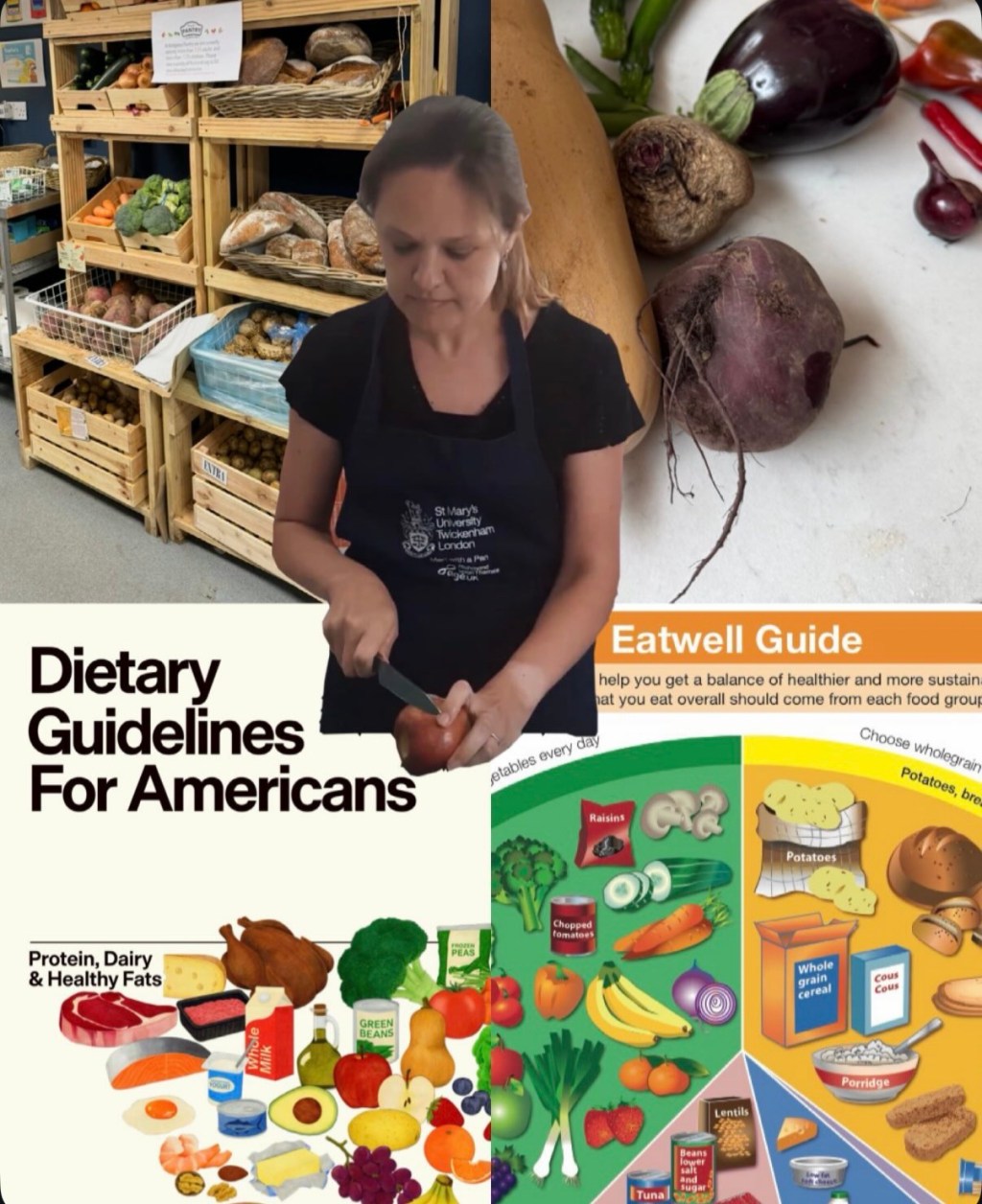
In January 2026, the United States released its latest Dietary Guidelines for Americans (2025–2030). These guidelines are updated every five years and are produced by the U.S. Department of Agriculture (USDA) and the Department of Health and Human Services (HHS). An independent panel — the Dietary Guidelines Advisory Committee (DGAC) — reviews the scientific evidence and makes recommendations that should, in theory, shape the final guidance.
Here in the UK, things work a little differently.
Our national dietary advice is represented by the Eatwell Guide, which is only updated when new evidence is published by the Scientific Advisory Committee on Nutrition (SACN). The last update was in 2016, following stricter recommendations on carbohydrate, fibre and sugar intake.
So why do these guidelines matter — and why has the new U.S. guidance sparked so much debate?
Why Do Countries Produce Dietary Guidelines?
Dietary guidelines exist to help the public — as well as policymakers, healthcare providers, educators and the food industry — understand what a healthy, balanced diet looks like.
Their primary goal is to reduce the risk of diet-related chronic disease by translating the latest evidence-based science into practical advice.
Nutrition science is constantly evolving, with many voices and interpretations. The hope is that having one central guide creates clarity, builds trust, and gives people confidence in the advice they’re following.
What Did I Like About the New U.S. Guidance?
There’s actually a lot to appreciate.
The guidelines are clear, concise, and easy to read. They emphasise eating real foods and moving away from highly processed options — a message strongly supported by current research.
The accompanying website is engaging and practical, offering everyday tips that people can realistically apply to their lives. From an accessibility point of view, this is a real strength.
So Why the Controversy?
This is where things get interesting.
The final published guidelines differ significantly from the DGAC’s scientific report. Instead, they appear to have been heavily influenced by an independent scientific foundation report created under the current administration’s health officials.
Some notable changes include:
- Protein recommendations increasing from 1.2 to 1.6 g per kg of body weight
- Meat-based protein placed at the top of the food pyramid
- Full-fat dairy prioritised over previous low-fat recommendations
- Whole grains such as oats, quinoa, brown rice, barley, rye and whole wheat pushed to the bottom of the pyramid
This feels contradictory.
On one hand, the written guidance still advises reducing saturated fat intake. On the other, meat and full-fat dairy are being actively promoted.
Even more striking is that recent UK and U.S. dietary surveys suggest that protein is not the nutrient most people are lacking — fibre is. Fibre plays a vital role in gut health, microbiome diversity, and long-term disease prevention, yet fibre-rich whole grains and plant foods appear to have been deprioritised.
That raises an important question: are these guidelines really reflecting nutritional need, or something else?
Sustainability: Why Does It Matter?
Another major talking point is the absence of sustainability considerations.
Dietary guidance has the potential to help address two urgent crises:
- The cost-of-living crisis
- The climate emergency
In 2019, the UK Parliament declared a climate and ecological emergency and set a legally binding target of Net Zero emissions by 2050. Achieving this means reducing emissions (through cleaner energy and less waste) and balancing what remains by capturing carbon and restoring nature.
From a food perspective, this translates into:
- Eating more seasonal and local foods
- Increasing plant-based choices
- Reducing processed and red meat
- Minimising food waste
Currently, only a handful of countries — notably the Scandinavian nations and the Netherlands — formally incorporate environmental considerations into their dietary guidelines.
Given the scale of the climate challenge, this feels like a missed opportunity.
What About Equity?
Perhaps the most important question of all:
Are dietary guidelines really designed for everyone?
In an ideal world, we would all eat fresh, whole, minimally processed foods. But many people face barriers such as:
- Limited income
- Lack of cooking facilities
- Time pressure
- Mental load and stress
For some households, processed foods aren’t a choice — they’re a necessity.
So are we unintentionally excluding large parts of the population?
Should guidelines acknowledge this reality and offer practical support for people who rely on affordable or convenient options? Could certain processed foods be positioned as stepping stones toward a healthier diet, rather than framed as something to avoid entirely?
Or have we reached a point where our societies are so divided that we effectively need separate guidance for rich and poor?
Final Thoughts
Dietary guidelines are powerful. They influence school meals, hospital food, public policy, and what ends up on supermarket shelves.
When they drift away from scientific evidence, ignore sustainability, or fail to account for real-world living conditions, we need to ask why — and who truly benefits.
As always, nutrition isn’t just about nutrients. It’s about people, systems, access, and long-term wellbeing — for both human health and planetary health.
 YourActiveNutritionist
Leave a comment